3/5/26
Analysis
Credibility Before Recovery: What Diageo Can Learn from BT & Vodafone

First impressions matter. Last week, when Sir Dave Lewis addressed investors for the first time as Diageo CEO, he did not enjoy the luxury of anonymity. His reputation preceded him: news of his appointment added £2bn to Diageo’s market value in a day. Expectations were high, and already priced in.
And Diageo needs his help. The shares have more than halved from their Covid peak. Topline growth is elusive in a category facing generational headwinds. Drastic times may indeed call for Drastic Dave.
Much has already been written about Rolls-Royce, arguably the most successful FTSE reversal in recent memory (just pipping Sir Dave’s Tesco turnaround). But for Diageo, the more relevant playbook lies with two telcos. BT and Vodafone provide clear lessons in how to signal intent and manage investor expectations through change.
BT & Vodafone: A Tale of Two Telcos
Both BT and Vodafone have enjoyed recoveries in their share prices since embarking on turnarounds under their new CEOs. BT is up 88% following outsider Allison Kirkby’s appointment in February 2024, outperforming the FTSE100 by 48% over the same period.
At Vodafone, Margherita Della Valle has overseen a longer-term project, with shares up a more modest 30% following her ascendency in April 2023, but 78% over the last year (compared to 23% for the index).
In both cases, the share price recovery did not begin with improved fundamentals – it began with improved credibility.
No two turnarounds are the same, but lessons can be learned from how both leaders approached their first moments with one of their toughest audiences: shareholders.
Vodafone: Clarity & Confidence
Della Valle’s appointment was initially met with some scepticism from investors. How could someone who had spent the last five years defending the company and its strategy in her role as CFO be the right person to revive Vodafone’s fortunes?
As a result, time was not on her side. Three weeks after her formal appointment as CEO she was required to front yet another set of disappointing results. But she did so with clarity and confidence, earned over 30 years at the company.
Her message was simple: “Vodafone must change” appeared in red on four slides. “Not good enough” was repeated five times. “Change” featured more than forty times. The diagnosis was blunt.
Her boldness was striking. As CFO, she had defended the prior strategy. As CEO, she tore it apart. But the approach made clear she was both recognising and owning the problem.
Media, unsurprisingly, chose to focus on the most tangible manifestation of the impending change. The FT ran the headline ‘Vodafone plans 11,000 job cuts’, leading to questions over whether there was a new strategy or if the new CEO was simply there to ‘trim the fat’.
Della Valle followed the well-trodden path of ‘kitchen sinking’. A tactic Sir Dave himself pioneered at Tesco in 2015: take the pain upfront, reset expectations, and rebuild from a lower base.
What has followed has been a ruthless right-sizing of the business – including the sale of Vodafone’s Italian footprint where Della Valle cut her teeth as a marketing analyst. Three years on, sentiment, headlines and most importantly share price, are all trending in the right direction.
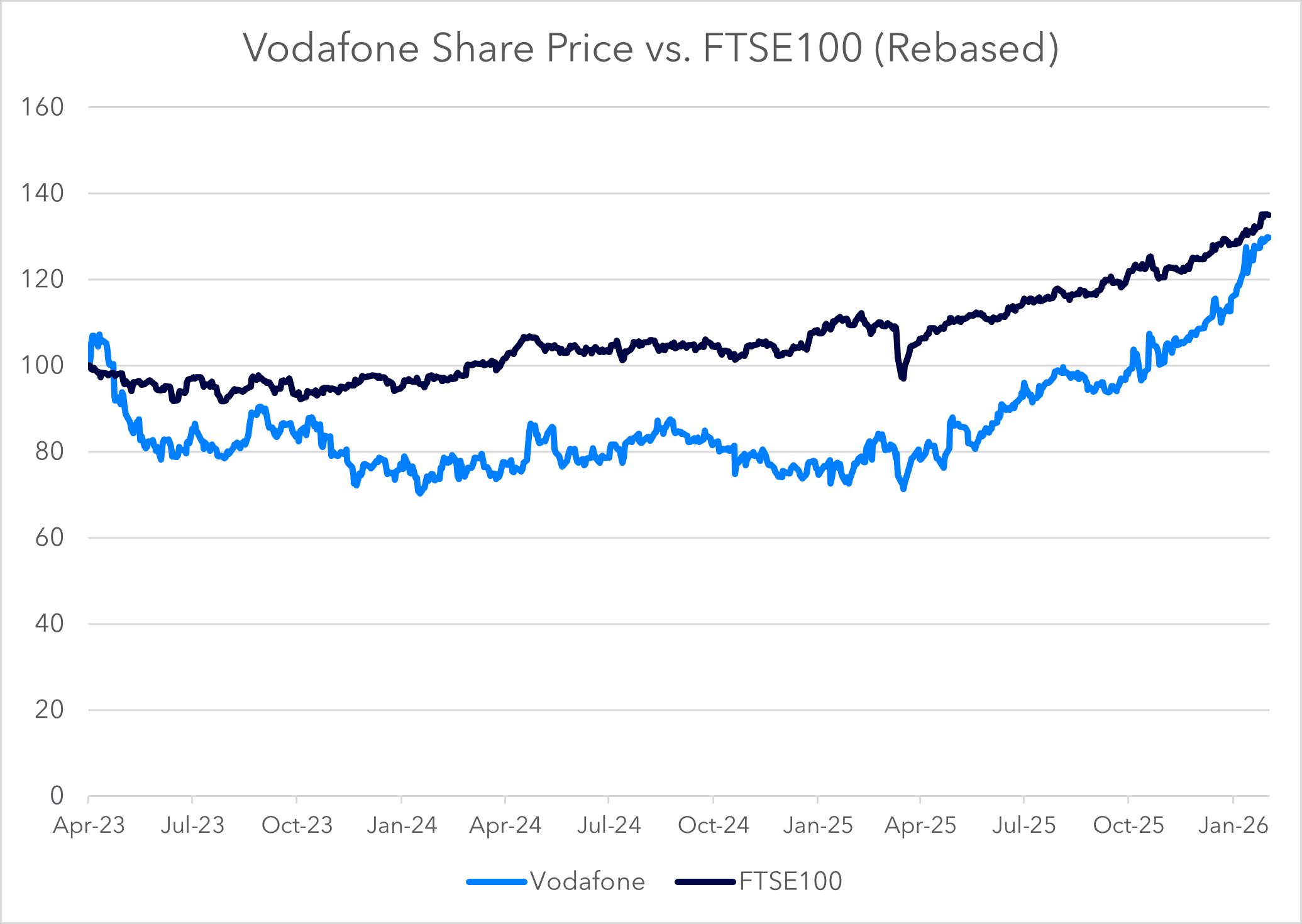
Figure 1: Vodafone share price vs. FTSE100 (rebased) since Margherita Della Valle’s appointment
BT: Stop, Look, Listen
Allison Kirkby had spent four years on BT’s Board before being appointed CEO. To outsiders, the business was seemingly in a perpetual process of transformation – started, but never finished – under her predecessor, Philip Jansen.
Unlike Della Valle, one of Kirkby’s first jobs as CEO was to announce better-than-expected Q3 revenues – quite sensibly, not the best time to announce yet another transformation plan. At full year a few months later, the story was markedly different.
Kirkby’s opening salvo in that year’s annual report was notable: “I’ve spent the last few months meeting as many of our customers and stakeholders as possible.” It was a smart way of setting the scene for what followed: I may not have been here too long, but I’ve listened to enough of the people who matter most to our success to know what this business needs.
BT’s mantra of choice was less blunt than “Vodafone must change”, with Kirkby opting for “Sharpening our focus” to encapsulate her strategy. And the market responded well. Despite a record £300m in shorts taken out against BT in the week before earnings, shares rocketed 17%, with Kirkby coming out firmly on the front foot.
The more measured approach to communicating taken by Kirkby was perhaps better-suited for a comparative outsider in a conservative organisation. Kirkby did not begin with a bonfire of the past. She build credibility through focused listening.
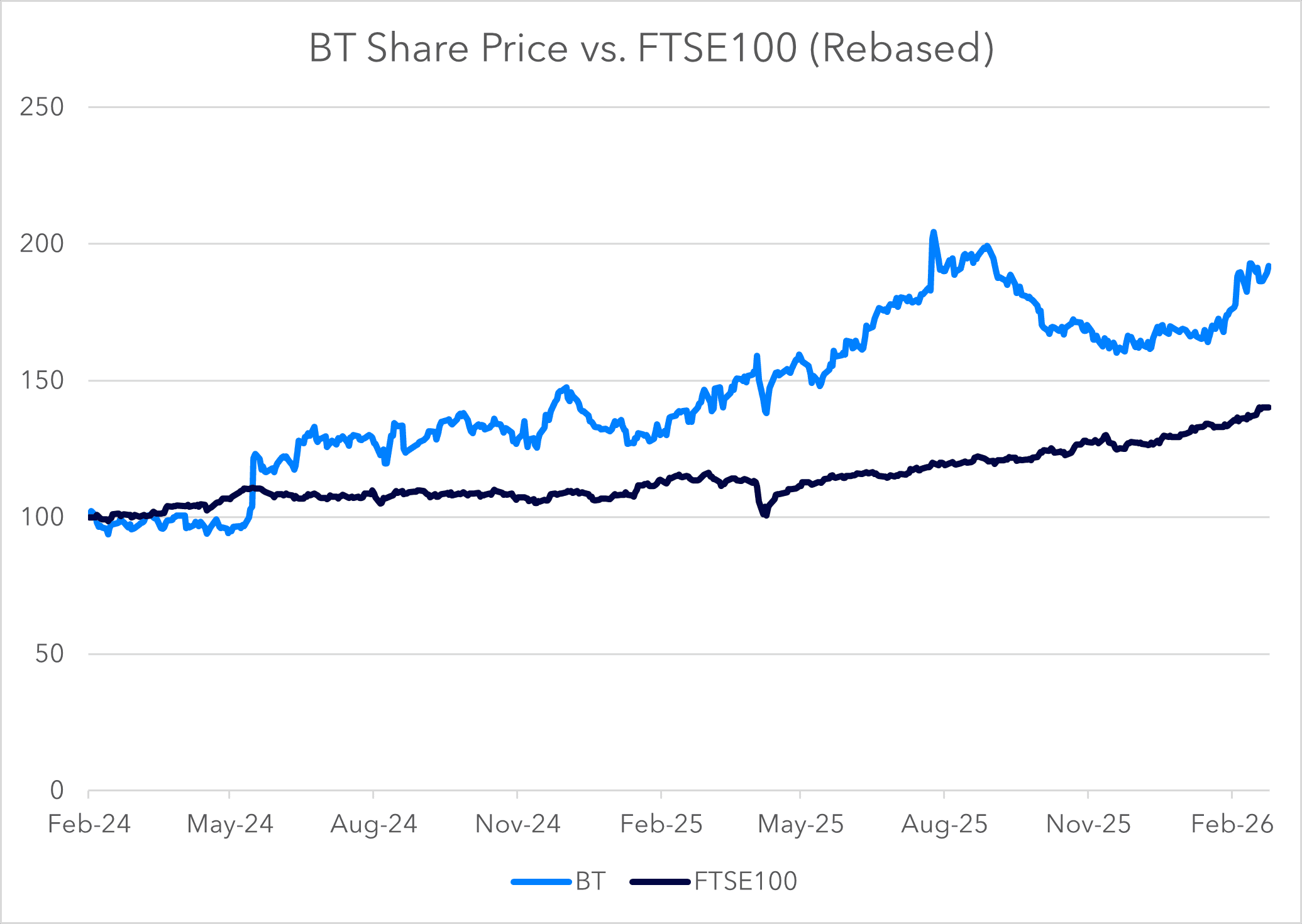
Figure 2: BT share price vs. FTSE100 (rebased) since Allison Kirkby’s appointment
Diageo Earnings: The Nepean Perspective
Sir Dave Lewis did not pull any punches on his first earnings call as Diageo CEO. Even the way the RNS was worded was telling, with very little effort made to dress up what was a disappointing set of results.
Words and phrases with clearly negative sentiment accounted for 10% of the first 200 words of the RNS. In a world where machines read market updates instantaneously and flash toplines across Bloomberg terminals, the message and intent were clear.
Lewis generously described the results as “mixed” and announced a substantial cut to the dividend. The market reacted accordingly. Shares fell 6% in early trading before ending the day around 15% down.
Aside from ‘kitchen sinking’ the bad news, Lewis hit some other critical communications points that will serve him and Diageo well moving forwards.
Firstly, he offered a credible diagnosis of Diageo’s struggles, something investors had signaled was much needed. The cost of living – consumers having less disposable income – was the main issue, rather than changes in generational or long-term habits.
He also bought himself time. Professing to have all the answers in month two was never advisable. On the earnings call, he announced the strategy was under review and he would provide a meaningful update in Q2. How the market reacts to that update will be a real test of his credibility.
In buying time, Lewis has also placed some control on the speed of the transformation narrative. The media is already more interested in the Diageo story than it ever was in BT or Vodafone, in part because of Lewis’ own reputation.
In our view, it would be advisable to avoid sitting down with the press until much later this year (and there is evidenced delivery to point to) – a timeline not dissimilar to Della Valle at Vodafone, who waited six months before speaking to media about her progress (and, perhaps not coincidentally, after Vodafone’s shares had bottomed out).
Lewis has an opportunity to cement his status as the FTSE’s pre-eminent turnaround specialist. Expectations are high. His first earnings call was less about promises, more about earning the time and trust to go again.